

Bernie Allen’s Nigeria Newsletter: No 3
Bernie Allen, VSO Volunteer sponsored by BNET has sent another report on her placement with the Ministry of Education, Kwara State
Bernie Allen: VSO Volunteer
June 2015: National Youth Service Corp – Niger State Camp
 Since 1973 all Nigerian University graduates have been required to complete a year of NYSC national service. Set up post the Biafra war, and in the absence of military conscription, the aim of the programme is to establish cohesion through broader cultural awareness. This is achieved by placing ‘Corp’ members in development roles away from their place of birth, exposing them to tribes and cultures with which they are unfamiliar. VSO Nigeria partner with NYSC to embed selected graduates within a range of diverse programmes across the country.
I visited a camp in Niger state, helping VSO to present their agenda, alongside many other invited organisations, and over a two day period spent time orientating those who chose to spend their 12 month service volunteering. As this was week one of their journey, Corp members were only just finding their feet on a camp rigidly run by the military to instil discipline. They also provided much need security and prevented any leaving as the spartan regime began to bite. All Corp members are required to wear uniform, were woken at dawn by bugle call, marched to parades, attended lectures about acceptable standards and required behaviour, and were required to pass military style obstacle courses.
 On passing tight security to enter the camp I realised it was divided in two, with a stout wall (seen behind this solider) gated, with further security. The first section comprised of many tented restaurants and market stalls, run by local tradesmen, as well as the basic NYSC accommodation blocs, where many Corp members were already busy hanging washing out to dry on their modest verandas. While there were many civilians offering laundry services, the token allowance issued to all Corp members had to be carefully managed, leaving many struggling to perform tasks which until now had been completed for them by their mothers, or in the case of the better off, by servants.
Here however, the aim was to create as equal an environment as possible, and all luxuries and demonstration of wealth were not permitted.


At the beginning of the programme the tribal and cultural diversity of Nigeria was celebrated by a selection of Corp members, who had prepared an exciting joint dance, where many different groups were represented collaborating and overcoming some performed tensions and clashes. This was enjoyable and held everyone’s attention, which wasn’t easy in the soaring heat, where many were visibly exhausted from adjusting to the stark changes they were undergoing.
 The main tribes of Hausa Fulani, Igbo and Yoruba all with different languages, historically diverse power systems and geographical locations are represented, with their customs and values also depicted. The Igbo were heavily persicuted during the war, often led by the Army, causing many to flee to safety as a consiquence. This example of recent historical tradgedy could, if not addressed, contribute to contemporary tension and divison. The idea is that inclusion and collaboration of subsequent generations, where they are encouraged to work as one provides a method to ameliorate this.
I was surprised and encouraged to learn that I was far from the only person who was undergoing culture shock. For many on the programme they were for the first time being exposed to the cultural traditions of other tribes, and more importantly being informed of reality and not the myths that can circulate, cloud reality and lead to division. It is hoped to create a bridge by providing a common goal and purpose, which can lead to the formation of firm friendships which can endure and overcome future problems and limit potential division.
 After their dance, some of the group pose for photographs. The heat was immense, but they had given their all and were celarly proud of their efforts. It is important to remember the diveristy at their core, and that despite wearing the same uniform and participating in a singular way, the goal is to ensure all tribes respect their difference and come to learn about each other from a position of neutrality. Demonstrating they can work as one while also celebrating their uniqueness has been vital to establishing stability across Nigeria.
After the excitement of the cultural dance, the two day programme began, with many different NGO’s and national organisations gathering to present to the group. Every individual is free to chose for themselves, not allocated a place, to ensure they gained the most from their development year. Acquiring vital work expereince, many career paths would be decided upon during this period. I had already discovered that many of my young VSO colleagues had used this exposure to determine their future direction. Finding a job in Nigeira is immensely difficult, with fierce competition, even for the educated, so this method also offers an important insite, and for many an opportunity to impress a potential future employer.
A group wait for the days programme to begin, wearing their NYSC uniform. Less ridged than the military, they have some choice of combination, always providing a limited number of particular garments are included.
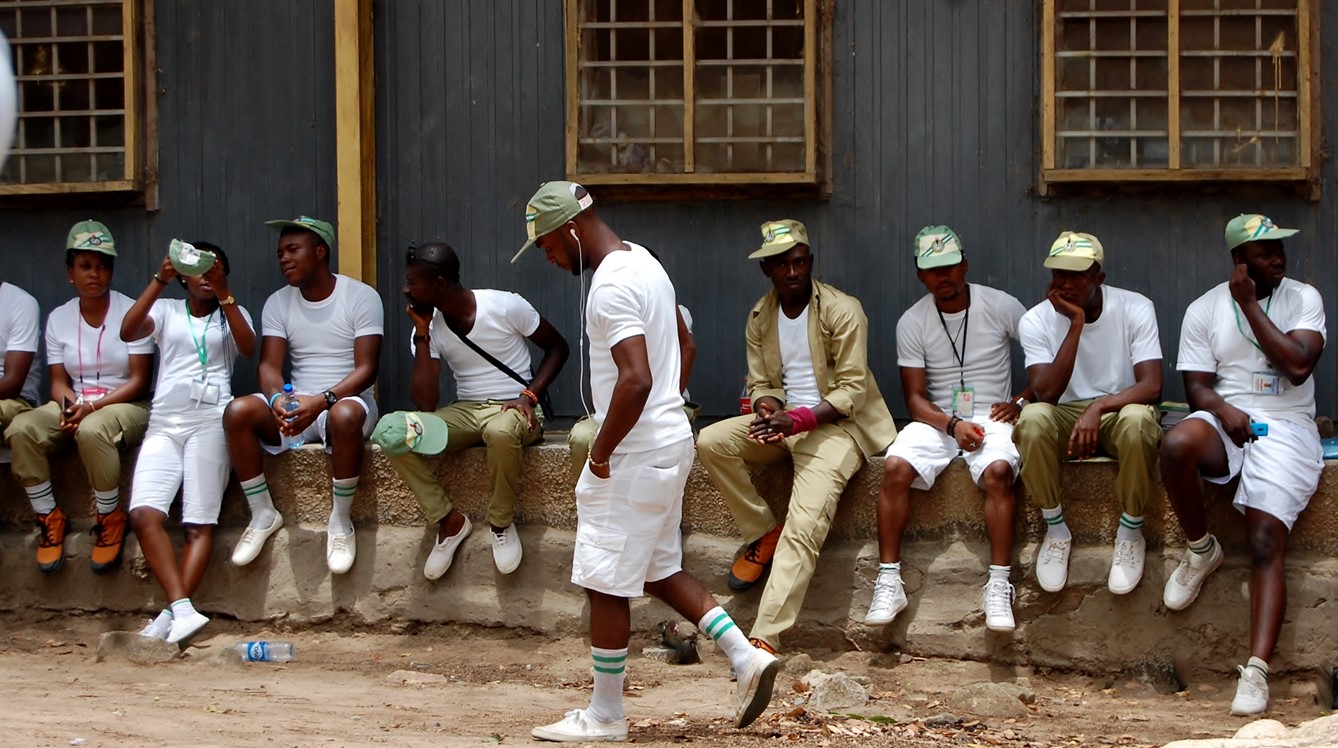

The heat proved a little too much for many once the presentations began. Keeping interest levels high and ensuring large groups didn’t miss out on the opportunities offered became more challenging as the day progressed. From time to time camp managers had them sing songs, moved them around regularly and ensured sufficient drinking water was passed around.

This group had chosen to spend their year with VSO, and were taken through initial induction and some basic orientation. Their enthusiasm and commitment was clear from the start and was most impressive. I was able to see and take part in the beginning of their journey, but there was a long road ahead of them all, during which they will grow, learn and contribute to the valuable work VSO are involved with across Nigeria.

 VideoandWeb.com